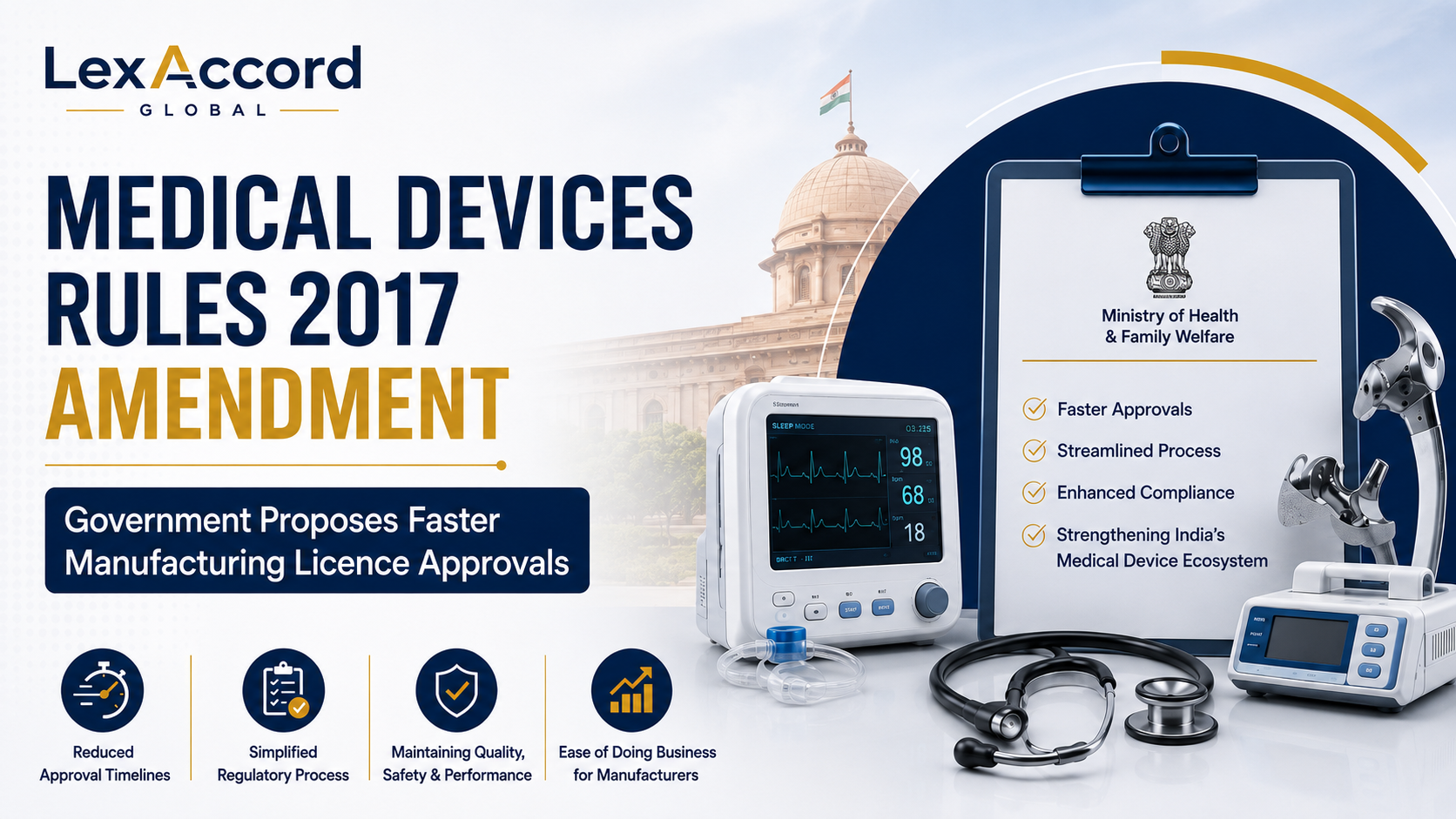
The Ministry of Health and Family Welfare (MoHFW) has published a draft notification proposing amendments to the Medical Devices Rules, 2017 to streamline the manufacturing licensing process for medical devices in India. The proposed changes are aimed at reducing approval timelines, enhancing regulatory efficiency, and improving the ease of doing business while maintaining the highest standards of quality, safety, and performance.
For medical device manufacturers, importers, and regulatory professionals, these amendments represent a significant step towards a faster and more predictable licensing framework under the Central Drugs Standard Control Organisation (CDSCO).
Why the Amendment Matters
India’s medical device industry has experienced substantial growth in recent years, driven by increasing domestic manufacturing, technological innovation, and government initiatives promoting self-reliance in healthcare. As the sector expands, efficient regulatory processes become increasingly important for ensuring timely market access without compromising patient safety.
The proposed amendments seek to address this need by shortening statutory timelines for manufacturing licence approvals and introducing defined timelines for every stage of the licensing process.
Medical Device Classification Under the Medical Devices Rules, 2017
Medical devices in India are classified into four risk-based categories:
- Class A: Low-risk devices
- Class B: Low to moderate-risk devices
- Class C: Moderate to high-risk devices
- Class D: High-risk medical devices
The draft amendments primarily affect the licensing timelines for Class B, Class C, and Class D medical devices.
Proposed Changes to Manufacturing Licence Timelines
The Ministry has proposed the following reductions in statutory approval timelines:
| Medical Device Class | Current Timeline | Proposed Timeline |
|---|---|---|
| Class B | 140 Days | 115 Days |
| Class C | 105 Days | 90 Days |
| Class D | 105 Days | 90 Days |
These revised timelines are expected to facilitate quicker regulatory approvals while maintaining compliance with established quality and safety requirements.
Class B Medical Devices
For Class B medical devices, the proposed manufacturing licence timeline has been reduced from 140 days to 115 days.
Examples of Class B devices include:
- Blood Pressure Monitors
- Pulse Oximeters
- Hypodermic Needles
- Infusion Sets
- Nebulizers
- Similar low to moderate-risk medical devices
The reduced timeline will help manufacturers bring essential healthcare products to market more efficiently.
Class C and Class D Medical Devices
For Class C and Class D medical devices, the proposed timeline has been reduced from 105 days to 90 days.
Examples include:
- Cardiac Stents
- Hip Implants
- Knee Implants
- Orthopaedic Implants
- Cardiac Valves
- Other life-supporting and high-risk medical devices
These products undergo comprehensive regulatory review due to their higher risk profile, and the proposed amendments seek to improve efficiency without compromising patient safety.
Greater Transparency in the Licensing Process
A notable feature of the draft amendments is the introduction of defined timelines for every stage of the manufacturing licence process, including:
- Application scrutiny
- Audit by Notified Bodies
- Verification of regulatory compliance
- Resolution of deficiencies
- Grant of Manufacturing Licence
Clearly defined milestones are expected to improve transparency, predictability, and accountability within India’s medical device regulatory framework.
Expected Benefits for the Medical Device Industry
The proposed amendments are expected to deliver several advantages:
Faster Market Access
Reduced approval timelines can help manufacturers commercialize products sooner, reducing delays in product launches.
Improved Ease of Doing Business
Predictable licensing timelines enable businesses to plan manufacturing, investments, and commercialization with greater confidence.
Enhanced Regulatory Efficiency
Defined processing timelines help streamline regulatory workflows and improve administrative efficiency.
Support for Domestic Manufacturing
The amendments complement India’s initiatives to strengthen indigenous manufacturing and promote the medical device sector under the Make in India vision.
Benefits for Healthcare Providers and Patients
The proposed regulatory reforms are also expected to improve healthcare delivery by:
- Accelerating the availability of quality-assured medical devices.
- Supporting faster adoption of innovative healthcare technologies.
- Improving access to essential medical devices across healthcare facilities.
- Maintaining stringent standards for quality, safety, and performance.
What Medical Device Manufacturers Should Do
While the amendments are currently in the draft stage, manufacturers should proactively prepare by:
- Reviewing their regulatory and licensing strategies.
- Ensuring technical documentation is complete and up to date.
- Strengthening Quality Management System (QMS) compliance.
- Planning future product approvals in line with the proposed timelines.
- Seeking expert regulatory guidance to ensure seamless compliance with CDSCO requirements.
Early preparedness will enable businesses to take full advantage of the streamlined licensing framework once the amendments are formally notified.
Conclusion
The proposed amendments to the Medical Devices Rules, 2017 reflect the Government of India’s continued efforts to modernize the country’s regulatory ecosystem for medical devices. By reducing manufacturing licence timelines and introducing structured processing milestones, the Ministry aims to create a more efficient, transparent, and industry-friendly approval process while preserving robust quality and safety standards.
If implemented, these reforms will benefit manufacturers through faster regulatory approvals and ultimately improve patient access to safe, effective, and high-quality medical devices across India.
How LexAccord Global Can Help
Navigating India’s medical device regulatory framework requires specialized expertise and a thorough understanding of CDSCO requirements. LexAccord Global provides end-to-end regulatory consulting services for domestic and international medical device manufacturers, including:
- Medical Device Manufacturing Licence
- CDSCO Import Licence
- Medical Device Registration
- Product Classification
- Technical Documentation Preparation
- Quality Management System (QMS) Compliance
- Regulatory Strategy and Gap Assessment
- Post-Approval Compliance and Lifecycle Management
Our regulatory experts help businesses achieve timely approvals while ensuring full compliance with the Medical Devices Rules, 2017 and applicable CDSCO regulations.
Here is the FAQ content extracted into a clean text format:
1. What are the proposed amendments to the Medical Devices Rules, 2017?
The Ministry of Health and Family Welfare has proposed amendments to the Medical Devices Rules, 2017, aimed at reducing the approval timelines for manufacturing licences for Class B, Class C, and Class D medical devices. The draft also introduces clearly defined timelines for each stage of the licensing process, making regulatory approvals more predictable and efficient.
2. Which medical device classes are affected?
The proposed amendments apply to Class B, Class C, and Class D medical devices, covering a wide range of medium- to high-risk medical devices regulated under the Medical Devices Rules, 2017.
3. What is the proposed manufacturing licence timeline for Class B medical devices?
Under the draft amendments, the manufacturing licence approval timeline for Class B medical devices is proposed to be reduced from 140 days to 115 days, enabling manufacturers to obtain approvals more quickly.
4. How will these amendments benefit medical device manufacturers?
The proposed amendments are expected to provide several benefits to medical device manufacturers, including:
- Faster regulatory approval timelines.
- Greater transparency in the licensing process.
- Clearly defined timelines for each stage of application review.
- Quicker market access for new medical devices.
- Continued compliance with quality, safety, and regulatory requirements.