Introduction
In a significant milestone for India’s digital healthcare transformation, Union Health Minister Shri Jagat Prakash Nadda has launched the Drug Registry, a centralized digital platform designed to standardize medicine-related information across the country’s healthcare ecosystem.
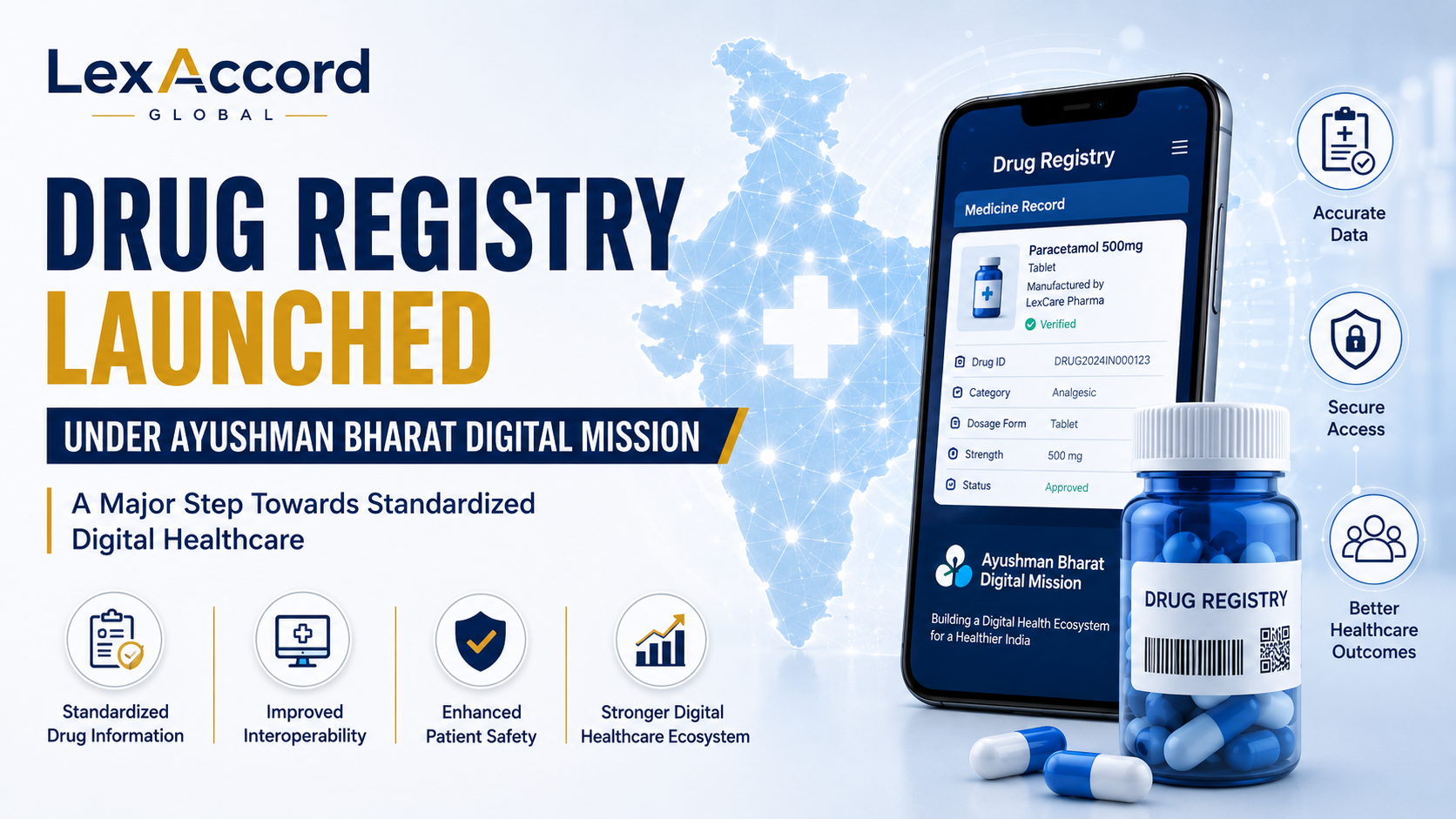
Developed under the Ayushman Bharat Digital Mission (ABDM), the Drug Registry aims to establish a single, trusted source of standardized drug information, enabling seamless interoperability between hospitals, healthcare professionals, digital health applications, pharmacies, and regulators.
The initiative is expected to improve patient safety, reduce medication errors, strengthen digital health records, and support efficient healthcare delivery nationwide.
Why India Needed a Drug Registry
Medicines form one of the most critical components of healthcare data. However, until now, the same medicine could be represented differently across hospitals, pharmacies, software platforms, and healthcare providers.
These inconsistencies often resulted in:
- Duplicate medicine records
- Inconsistent drug naming conventions
- Prescription errors
- Challenges in electronic prescribing
- Supply chain inefficiencies
- Limited interoperability between healthcare systems
The newly launched Drug Registry addresses these issues by introducing standardized medicine identification and terminology across India’s digital health ecosystem.
What is the Drug Registry?
The Drug Registry is a centralized digital repository that provides standardized information for medicines marketed and used in India.
It serves as the authoritative reference database for drug-related information, enabling healthcare systems to consistently identify, store, exchange, and utilize medicine data.
The platform has been developed collaboratively by:
- Central Drugs Standard Control Organization (CDSCO)
- National Resource Centre for EHR Standards (NRCeS), Pune
The registry also adopts internationally recognized standards, including SNOMED CT, to ensure semantic consistency and interoperability across healthcare applications.
Drug Registry: Key Highlights
The newly launched registry currently includes:
- 123,000+ branded medicines
- 10,000+ generic medicines
- 29,000+ pharmaceutical substances
Users can easily search medicines using:
- Generic name
- Brand name
- Active substance
- Manufacturer
This standardized approach ensures that all stakeholders access accurate and verified medicine information from a single trusted source.
Integration with India’s Digital Health Ecosystem
The Drug Registry has been designed for seamless integration across healthcare platforms.
It supports integration with:
- Hospital Management Information Systems (HMIS)
- Electronic Prescription (e-Prescription) platforms
- Doctor-facing clinical applications
- ABDM-compliant digital health solutions
Additionally, the platform offers Open APIs, allowing healthcare software developers and digital health providers to integrate standardized medicine data directly into their systems.
This significantly enhances interoperability while reducing manual data inconsistencies.
Drug Registry Joins ABDM’s Four Core Digital Registries
The Drug Registry becomes the fourth foundational registry under the Ayushman Bharat Digital Mission, joining:
- ABHA Registry – Digital health identities for individuals
- Healthcare Professional Registry (HPR) – Verified healthcare professionals
- Health Facility Registry (HFR) – Registered healthcare facilities
- Drug Registry – Standardized medicine information
Together, these registries create the digital backbone of India’s evolving healthcare infrastructure.
Benefits for Healthcare Stakeholders
Healthcare Providers
- Improved prescribing accuracy
- Reduced medication errors
- Faster clinical decision-making
- Standardized drug references
Hospitals
- Better interoperability across clinical systems
- Cleaner electronic medical records
- Reduced duplicate medicine entries
- Improved patient data quality
Digital Health Companies
- Access to verified medicine databases through APIs
- Faster integration with ABDM infrastructure
- Standardized terminology across platforms
Patients
- Safer prescriptions
- Improved continuity of care
- Consistent medicine information across healthcare providers
- Enhanced digital health experiences
Regulatory and Industry Significance
The launch of the Drug Registry represents another important milestone in India’s ongoing digital health reforms.
For healthcare providers, hospitals, pharmaceutical companies, HealthTech startups, and software developers, standardized medicine data will improve regulatory compliance, facilitate interoperability, and support nationwide adoption of digital healthcare solutions.
The initiative also aligns India more closely with global healthcare data standards, promoting better integration of electronic health records and digital health services.
LexAccord Global’s Perspective
The introduction of the Drug Registry demonstrates the Government of India’s continued commitment to building a robust, interoperable, and technology-driven healthcare ecosystem.
Organizations operating in pharmaceuticals, medical devices, healthcare IT, digital health, and regulatory compliance should closely monitor the implementation of this initiative, particularly its integration requirements and opportunities for digital transformation.
At LexAccord Global, we help healthcare organizations navigate India’s evolving regulatory landscape through regulatory advisory, licensing support, digital health compliance, CDSCO guidance, and strategic compliance solutions.
As India’s healthcare ecosystem becomes increasingly digitized, businesses that proactively align with emerging regulatory frameworks will be better positioned for sustainable growth and innovation.
Conclusion
The launch of the Drug Registry under the Ayushman Bharat Digital Mission marks a significant advancement in India’s digital healthcare journey. By creating a standardized, interoperable, and reliable medicine database, the initiative strengthens healthcare delivery, enhances patient safety, and lays the foundation for more connected digital health services across the country.
As adoption expands, the Drug Registry is expected to become a critical pillar supporting India’s vision of a unified and digitally empowered healthcare ecosystem.